
Sticky Inflation’s Grip: Central Banks Walk a Tightrope Over Global Growth
As energy prices surge and trade flows stutter, policymakers face agonizing choices between taming prices and avoiding recession.
Global economic tremors intensified in September as inflation proved stubbornly persistent, with US consumer prices rising 3.7% year-on-year while the eurozone recorded 4.3% inflation, defying central banks’ aggressive tightening cycles. The International Monetary Fund’s latest World Economic Outlook reveals a precarious balancing act, trimming global growth forecasts to 3.0% for 2023 amid what Managing Director Kristalina Georgieva termed “fragmentation headwinds.” This economic tightrope walk manifests most acutely in manufacturing hubs like Germany, where factory orders plunged 11.7% in August, signaling contractionary pressures rippling through supply chains.
Energy markets remain the primary inflation catalyst, with Brent crude oil futures breaching $94 per barrel in September – a 30% quarterly surge that acts as both economic stimulant and suppressant. “The energy shock functions like intravenous adrenaline,” notes Oxford Economics’ lead analyst, “momentarily boosting producer economies while simultaneously constricting consumer spending arteries.” This paradox is particularly evident in emerging markets, where India’s wholesale price index jumped 2.5% in August despite six consecutive interest rate hikes, highlighting the diminishing returns of monetary policy interventions.
Trade corridors echo the strain, with the World Trade Organization reporting a 0.9% quarterly contraction in global goods flows – the sharpest decline since pandemic disruptions. Technology exports, particularly semiconductors, have become the canary in this coal mine; South Korea’s early October data shows chip shipments falling 18% year-on-year, reflecting dampened consumer electronics demand. The auto sector faces parallel pressures, as evidenced by European automakers slashing production targets amid ballooning battery material costs that have increased EV manufacturing expenses by 22% since January.
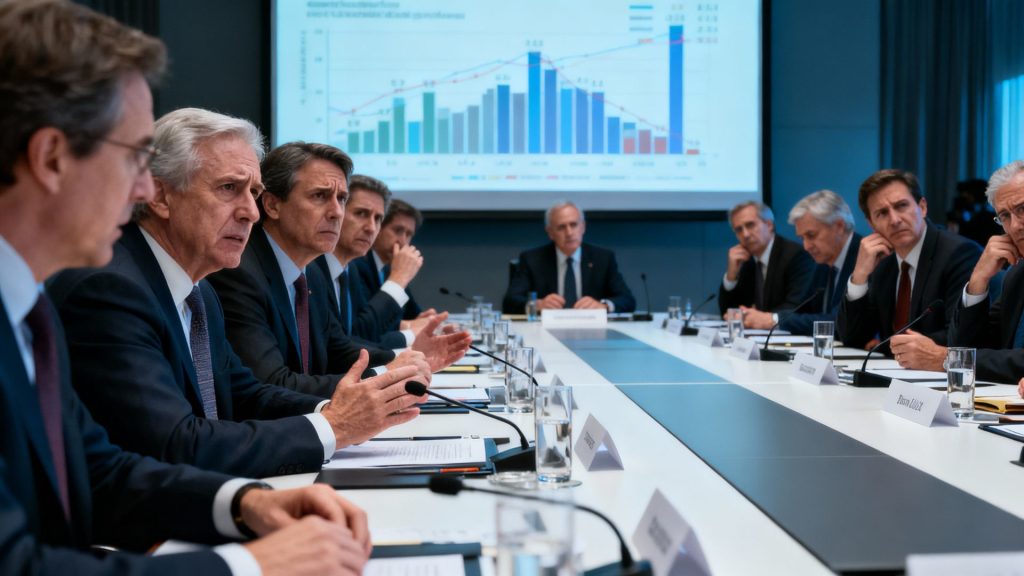
Central bankers now confront what Federal Reserve Chair Jerome Powell called “the least bad options,” with September seeing the European Central Bank implement its tenth consecutive rate hike while simultaneously signaling a potential pause. This policy schizophrenia reflects deepening divisions within governing councils, torn between persistent core inflation – still hovering near 5% across major economies – and ominous leading indicators like the inverted US Treasury yield curve, historically a 98% accurate recession predictor.
The horizon darkens with geopolitical fissures widening, as OPEC+ production cuts collide with G7 price caps in an energy chess match where Russia’s pipeline curtailments have already erased 2.1% from EU industrial output. Meanwhile, climate extremities compound supply vulnerabilities, with Panama Canal transit restrictions choking Asia-Americas shipping lanes while Canadian wildfires disrupted North American rail networks, creating what the World Bank terms “compound fragility.” Bond markets price this uncertainty at 75 basis points, the widest developed economy yield spread since 2011.
In this high-stakes convergence, the path forward resembles navigating storm-lashed seas with compromised instruments. Fiscal authorities deploy targeted subsidies as emergency ballast – France’s €10 billion electricity cap for SMEs being the latest example – while monetary architects retrofit policy frameworks for a fragmented world. As global debt mounts to 336% of GDP according to the Institute of International Finance, the coming quarters will test whether economic vessels can be stabilized without capsizing growth entirely.