
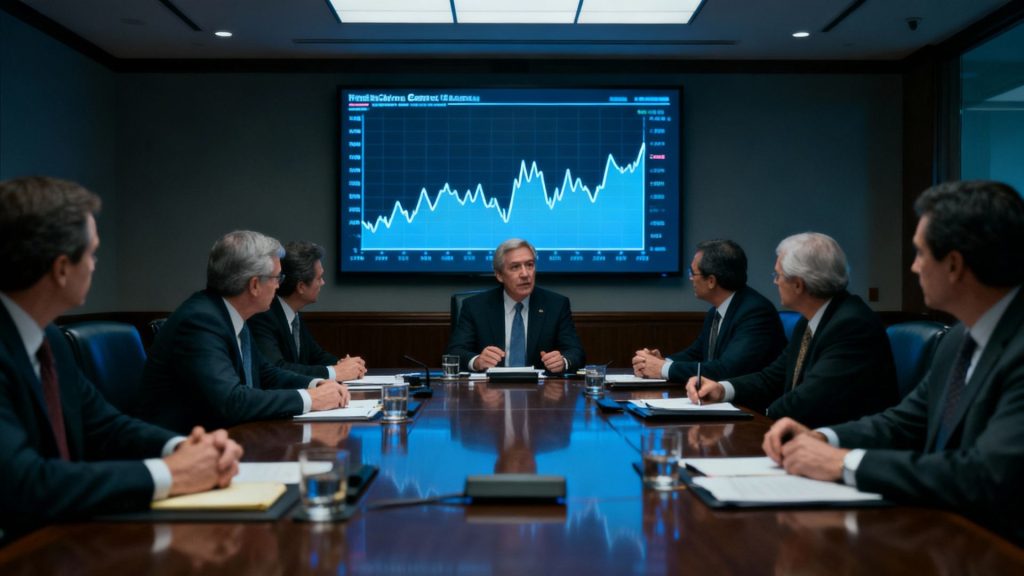
Inflation’s Tightrope Walk: Central Banks Dance on a Global Economic Precipice
As persistent price pressures and volatile trade winds collide, policymakers face a high-stakes balancing act between curbing inflation and fostering growth in an era of uncertainty.
Recent data from September 2023 reveals a stubbornly high inflation landscape, with the U.S. Consumer Price Index (CPI) holding at 3.7% and the Eurozone hovering near 5%, signaling that the global economy remains ensnared in a cost-of-living crisis. This surge, fueled by lingering supply chain disruptions and geopolitical tensions like the Ukraine conflict’s impact on energy markets, has forced central banks into a defensive stance, as evidenced by the Federal Reserve’s decision to maintain interest rates above 5%. The initial months of 2023 saw a brief respite, but the resurgence underscores how fragile the recovery truly is, setting the stage for a complex narrative of resilience and risk.
Delving deeper, the root causes intertwine pandemic-era bottlenecks with ongoing trade frictions, such as U.S.-China tariff disputes that have reshaped global supply chains. Analysts from institutions like the International Monetary Fund (IMF) highlight how these factors amplify input costs, squeezing businesses and households alike—imagine inflation as a relentless tide, eroding purchasing power while exposing vulnerabilities in interconnected markets. For instance, the European Central Bank’s Christine Lagarde noted in recent remarks that energy price volatility acts as a ‘double-edged sword,’ simultaneously dampening demand and inflating production expenses, a dynamic that complicates monetary policy adjustments aimed at stability.
This economic turbulence reverberates across key industries, with manufacturing sectors in Europe and Asia bearing the brunt through reduced exports and profit margins. Data from October 2023 shows China’s export growth slowing to 2.5%, reflecting weakened global demand, while automakers and tech firms grapple with higher component costs, prompting shifts toward automation and localized production. The ripple effects extend to renewable energy, where investments surge as a counterbalance—solar and wind projects expand rapidly, yet face hurdles from raw material shortages, illustrating how innovation races against constraint in this high-pressure environment.
In response, governments and central banks deploy calibrated strategies, with the Fed’s Jerome Powell emphasizing a ‘data-dependent approach’ to rate hikes, while the European Union rolls out targeted subsidies to shield industries. China, facing its own growth headwinds, has introduced fiscal stimuli to boost domestic consumption, as reported in recent policy announcements. These measures, however, walk a fine line; too aggressive, and they risk triggering recessions, too timid, and inflation could spiral—creating a policy puzzle where every move is scrutinized for its global implications.
Looking ahead, the outlook teeters between cautious optimism and stark warnings, with the IMF projecting a modest 2.9% global growth in 2024 but flagging risks like potential recessions in advanced economies. Opportunities emerge in digital transformation and green finance, as blockchain and AI-driven solutions gain traction in streamlining trade and reducing emissions, yet these are tempered by threats of escalating trade wars or energy shocks. Investors and policymakers must navigate this terrain with agility, prioritizing resilience over short-term gains to harness the winds of change.
In conclusion, the global economy stands at a pivotal crossroads, where the interplay of inflation, trade, and innovation demands unprecedented coordination. As nations strive for equilibrium, the lessons of this era underscore that sustainable growth hinges not just on monetary levers but on fostering inclusive, adaptive systems that can weather the storms of an ever-evolving world.