
Global Economy Teeters on Fragile Ground: Inflation’s Shadow and Central Banks’ High-Stakes Gambit
As Prices Surge and Growth Falters Worldwide, Policymakers Battle to Avert Recession Amid Strained Supply Chains and Geopolitical Heat
The global economy faces mounting pressure as fresh data reveals persistent inflation and slowing growth, forcing central banks into a delicate balancing act. Recent figures indicate that U.S. inflation stood at 3.7% in September, while Eurozone GDP growth decelerated to 0.1% in the third quarter, underscoring a widespread slowdown. Supply chain disruptions, fueled by ongoing conflicts and trade bottlenecks, continue to drive up costs, particularly in energy and commodities. This convergence of factors has created a volatile environment where policymakers must weigh aggressive rate hikes against the risk of triggering a deeper downturn, highlighting the fragility beneath the surface of global markets.
Delving deeper, the root causes of this inflationary surge stem from multifaceted global challenges. Energy prices remain elevated due to geopolitical tensions, such as the Middle East conflicts, which have pushed oil prices above $90 a barrel, severely impacting production costs worldwide. Simultaneously, supply chain issues persist, as evidenced by China’s export decline of 6.2% in September amid its economic slowdown and property sector woes. Analysts from the International Monetary Fund note that these pressures are compounded by structural shifts, including post-pandemic demand imbalances and labor shortages in key industries. Without swift intervention, these dynamics threaten to stifle consumer spending, which has already shown signs of weakening in regions like Europe, where retail sales dipped by 0.3% last month.
The repercussions ripple across industries, with businesses grappling with squeezed margins and altered investment strategies. Manufacturing sectors in Germany and Japan report reduced output due to higher input costs, while tech companies face supply delays affecting AI and digital innovation projects. Market volatility has surged, with stock indices experiencing sharp fluctuations as investors recalibrate expectations; for instance, the S&P 500 fell by 5% in early October amid recession fears. This economic strain is palpable in everyday scenarios, such as consumers delaying purchases or businesses scaling back expansions, illustrating how global forces directly shape local economies and testing the resilience of supply chains still recovering from pandemic-era disruptions.
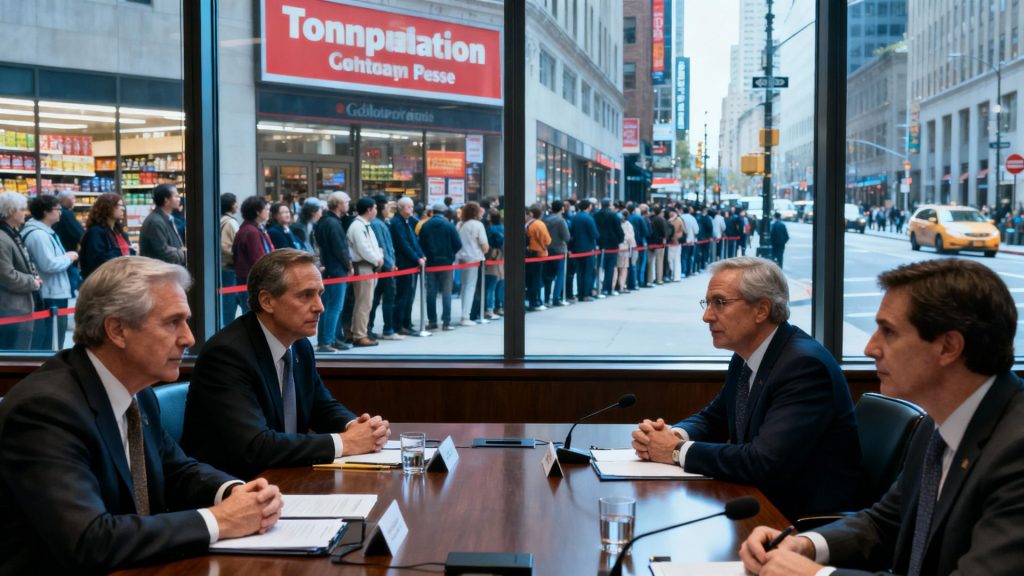
In response, central banks are deploying cautious yet assertive measures to curb inflation without derailing growth. The Federal Reserve held rates steady in September but signaled potential hikes later this year, while the European Central Bank raised its benchmark rate to 4% in October, its highest in two decades. These actions reflect a high-wire act, as policymakers balance the need for price stability with avoiding a hard landing. Officials like Christine Lagarde have emphasized data-driven approaches, but critics warn that such tightening could exacerbate unemployment, already edging up in some economies. This delicate dance highlights the limited tools available amid global interdependencies, with outcomes hinging on coordinated efforts to stabilize markets.
Looking ahead, the global economy confronts significant risks, including the potential for prolonged stagnation or even recession if current trends persist. Forecasts from the World Bank suggest that global GDP growth may slow to 2.4% in 2024, with emerging markets bearing the brunt of trade imbalances. Key uncertainties include escalating geopolitical conflicts, which could disrupt energy flows further, and climate-related challenges impacting green transitions. However, opportunities exist, such as accelerated investments in digital finance like blockchain, which can enhance efficiency. Ultimately, navigating this complex landscape requires agile policymaking and international cooperation to foster sustainable recovery, as the world’s economic future hangs in the balance.