
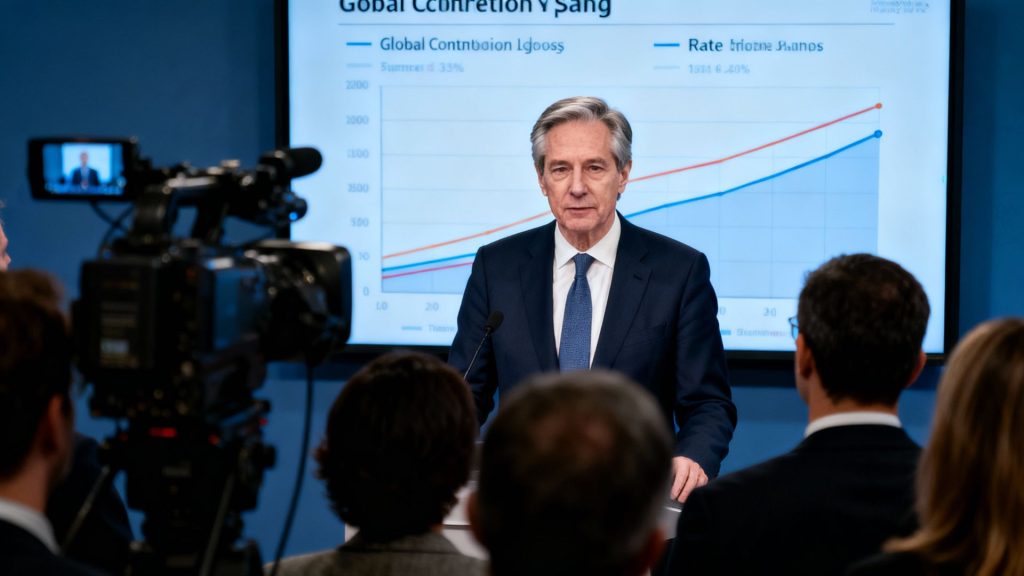
Global Inflation’s Relentless Grip: Central Banks Wrestle with Rates as Economies Teeter
Amid soaring prices and policy dilemmas, industries face turbulence while digital currencies and AI innovations carve new paths in a volatile landscape.
In June 2023, global inflation remained stubbornly high, with the U.S. Consumer Price Index (CPI) rising 3.0% year-over-year, signaling persistent pressure on households and businesses. This economic tension, fueled by lingering supply chain disruptions and geopolitical conflicts like the Ukraine war, has created a precarious balancing act for policymakers worldwide. As Federal Reserve Chair Jerome Powell noted in recent statements, the battle against inflation is far from over, requiring continued vigilance to avoid tipping economies into recession.
Delving deeper, the root causes of this inflationary surge stem from a complex web of factors: post-pandemic demand rebounds, energy price spikes exacerbated by OPEC+ production cuts, and labor market tightness driving wage growth. For instance, Eurozone inflation hovered at 5.5% in May, reflecting similar challenges across advanced economies. Analysts from the International Monetary Fund (IMF) warn that without coordinated policy action, these pressures could erode consumer purchasing power and stifle growth, turning a temporary squeeze into a prolonged economic headache.
The ripple effects are palpable across key industries, with the energy sector experiencing wild price swings—Brent crude oil surged to $85 per barrel in June—disrupting manufacturing and transportation. Simultaneously, the tech industry thrives on AI advancements, as companies like NVIDIA report record revenues from generative AI applications, reshaping markets. Yet, this innovation boom contrasts sharply with traditional sectors, where export-dependent economies like Germany face export declines due to reduced global demand, illustrating a fragmented recovery that demands agile adaptation from businesses.
In response, central banks are doubling down on aggressive monetary policies, with the Federal Reserve raising interest rates to a 22-year high of 5.25% in July, while the European Central Bank (ECB) followed suit with similar hikes. These moves, aimed at curbing inflation, risk stifling investment and growth, as noted by ECB President Christine Lagarde, who emphasized the delicate trade-off between price stability and economic vitality. Such policies have already cooled housing markets and tightened credit, prompting fears of a broader slowdown if rates remain elevated for too long.
Looking ahead, the global economy faces a high-risk horizon, with potential recessions in 2024 if inflation proves stickier than expected. However, opportunities abound in digital transformations: central bank digital currencies (CBDCs) are gaining traction, with over 130 countries exploring their implementation, and AI-driven fintech innovations promise efficiency gains in payments and risk management. As IMF projections indicate, embracing these technologies could spur inclusive growth, but only if policymakers navigate emerging risks like cybersecurity threats and regulatory gaps with foresight and collaboration.
Ultimately, the current economic saga underscores a world in flux, where nations must balance immediate firefighting with long-term resilience. In this era of uncertainty, the path forward hinges on adaptive strategies that leverage digital leaps to mitigate traditional vulnerabilities, ensuring sustainable progress amid unrelenting challenges.