
Stagflation’s Grip Tightens: Global Economies Grapple with Inflation’s Bite and Growth Fatigue
Central Banks Navigate Policy Quagmire as Energy Shocks and Supply Snarls Fuel Dual Crises Across Major Markets
Global inflation surged to 6.8% year-on-year in June 2024, the highest since 2022, while Q2 GDP growth slowed to 2.1% across advanced economies, according to the latest IMF data. This toxic cocktail of rising prices and stalling output has left policymakers walking a tightrope, as Federal Reserve Chair Jerome Powell acknowledged in his July 16 testimony: “We’re balancing the risk of doing too much against doing too little.” The Eurozone’s core inflation stubbornly held at 5.7%, defying expectations of a swift decline, with energy costs acting like a wrecking ball through industrial supply chains. Meanwhile, emerging markets face currency devaluations, with the Indian rupee hitting record lows against the dollar last week.
Monetary authorities face unprecedented dilemmas, caught between inflation-fighting mandates and recession risks. The European Central Bank’s recent 25-basis-point hike brings its deposit rate to 3.75%, yet Christine Lagarde warned of “persistent underlying price pressures.” In contrast, the Bank of Japan maintains ultra-loose policies, widening yield differentials that triggered a 15% yen depreciation since May. This divergence creates global ripples, with capital fleeing emerging markets as investors chase higher returns, as noted by World Bank Chief Economist Indermit Gill: “Policy fragmentation is becoming a systemic vulnerability.”
Trade dynamics exacerbate the strain, with global goods exports falling 3.2% in Q2. Semiconductor shortages, highlighted by Taiwan’s 18% export contraction in June, continue throttling automotive and electronics sectors. The U.S.-China tech decoupling intensifies, with Beijing restricting gallium exports—a vital chip component—prompting European Commission warnings about “critical supply dependencies.” Meanwhile, green energy investments surge, with solar installations up 40% year-on-year, yet mineral supply bottlenecks loom. The International Energy Agency reports lithium prices doubled since January, threatening EV affordability.
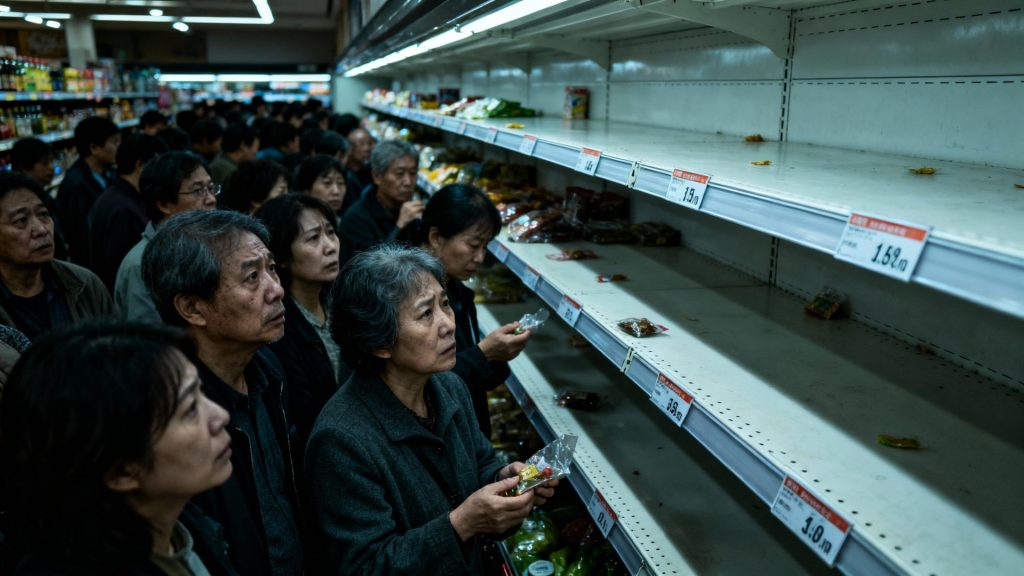
Labor markets flash warning signals beneath headline strength. U.S. unemployment remains at 3.6%, but temporary job placements fell 12% in Q2, signaling cooling demand. Wage growth trails inflation in 70% of OECD economies, eroding purchasing power. As households cut discretionary spending, retailers like Walmart report rising inventories, suggesting a consumer pullback. “The resilience is cracking,” observes BlackRock Investment Institute’s Jean Boivin, pointing to declining consumer confidence indices across G7 nations.
Geopolitical fractures amplify economic headwinds. Russia’s termination of the Black Sea grain deal sent wheat futures soaring 22% in July, while OPEC+ production cuts keep oil above $85/barrel. Climate shocks compound disruptions, with Canadian wildfires and El Niño-induced droughts threatening agricultural yields. These cascading crises expose fragile just-in-time systems, accelerating reshoring trends. The EU’s Critical Raw Materials Act, finalized last week, aims to source 10% of strategic minerals domestically by 2030—a tacit admission of globalization’s retreat.
Forward-looking indicators paint a bifurcated outlook. Manufacturing PMIs remain contractionary in Europe (45.3) and the UK (46.5), but U.S. services expansion (54.4) offers hope. AI-driven productivity gains could offset labor shortages, with corporate investments in automation up 35% year-on-year. Yet debt sustainability concerns mount, as global public debt approaches 100% of GDP. Moody’s July 20 report flags “elevated refinancing risks” for highly leveraged economies, particularly Italy and Argentina.
The global economy now resembles a complex algorithm recalibrating in real-time. While central banks deploy digital currencies to enhance policy transmission—like the ECB’s digital euro pilot—their tools remain blunt against supply-driven inflation. The path forward demands synchronized fiscal-monetary coordination, yet political divisions threaten coherent action. As the world navigates this polycrisis, adaptability becomes the ultimate currency, with nations rewriting economic playbooks amid relentless uncertainty.