
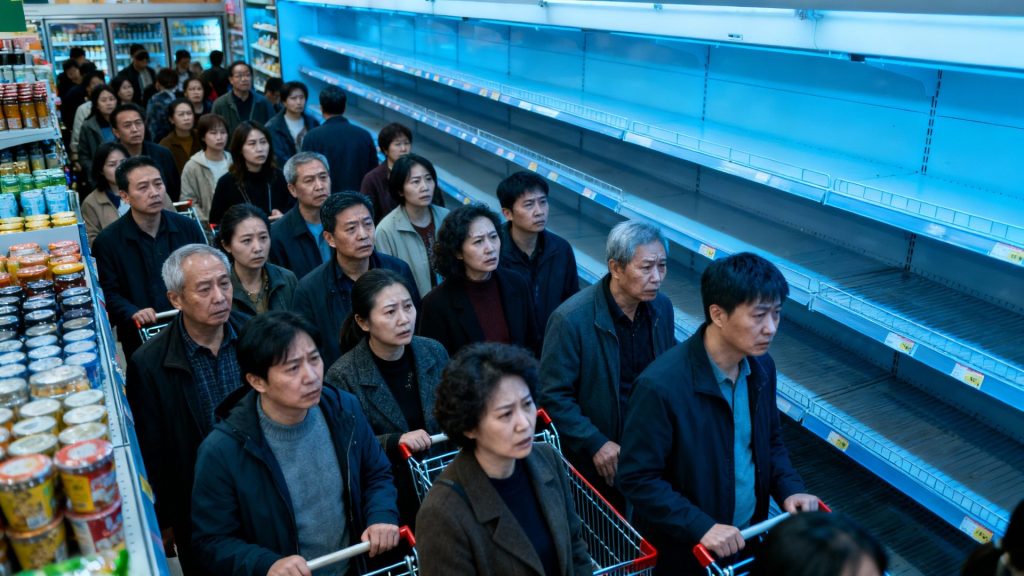
Global Inflation’s Relentless Squeeze: Central Banks Grapple With Growth Versus Price Stability
As consumer prices surge across major economies, policymakers face a high-stakes balancing act to curb inflation without triggering recession, amid persistent supply chain disruptions and energy volatility.
Recent data underscores the unyielding grip of inflation, with the U.S. Consumer Price Index rising 0.4% in September, driven by stubbornly high costs in housing and energy. This persistent pressure acts like a vise tightening on household budgets, squeezing disposable income and dampening consumer confidence. The International Monetary Fund’s latest report highlights that global inflation remains elevated, averaging 5.8% in advanced economies for Q3 2023, as geopolitical tensions and supply chain bottlenecks continue to fuel price rises. For instance, the ongoing conflict in Ukraine has exacerbated energy shortages, pushing oil prices to near $90 per barrel, while port congestion in Asia disrupts critical imports.
Transitioning to the root causes, this inflation surge is not merely cyclical but structural, rooted in fragmented global supply chains and labor market imbalances. Supply disruptions, such as those from recent factory shutdowns in China due to regulatory shifts, have created ripple effects, delaying shipments and inflating input costs for manufacturers worldwide. Energy prices, soaring due to reduced Russian exports, have injected volatility into industrial production, forcing companies to absorb higher expenses or pass them to consumers. Analysts from J.P. Morgan note that core inflation—excluding volatile food and energy—remains sticky, reflecting deeper issues like wage pressures in tight labor markets. As Federal Reserve Chair Jerome Powell stated in a recent speech, “The path to price stability is fraught with challenges, requiring careful calibration to avoid overshooting.”
This economic strain has cascaded into tangible industry impacts, with businesses reporting squeezed profit margins and scaled-back investments. In the technology sector, firms like Apple and Samsung have flagged higher component costs, leading to production delays and potential job cuts in manufacturing hubs. Automotive industries face similar headwinds, as electric vehicle battery shortages—exacerbated by lithium supply constraints—drive up prices and slow adoption rates. Consumer spending has softened, with retail sales growth stalling in Europe and the U.S., while stock markets exhibit heightened volatility, reflecting investor unease. The World Bank warns that prolonged inflation could erode corporate earnings and trigger a wave of defaults in vulnerable emerging markets, where debt levels are already precarious.
In response, central banks are navigating a delicate policy tightrope, with the Federal Reserve holding interest rates steady in its latest meeting but signaling potential hikes if inflation persists, while the European Central Bank implemented a 0.25% increase to combat eurozone price pressures. These actions aim to cool demand without stifling growth, yet they risk amplifying recession fears. Powell emphasized the Fed’s data-dependent approach, stating, “We are committed to restoring price stability, but mindful of the lagged effects on employment.” Concurrently, governments are deploying fiscal measures, such as targeted subsidies for energy-intensive industries, to alleviate short-term pain. However, divergent policies across regions—like China’s stimulus versus Europe’s austerity—create coordination challenges in a globally interconnected economy.
Looking ahead, opportunities in digital and green transformations offer a silver lining, with AI-driven efficiencies and renewable energy investments poised to boost productivity. For example, blockchain technology is streamlining supply chains, reducing delays and costs, while AI adoption in finance enhances risk management. Yet, risks loom large: unchecked inflation could spiral into stagflation, and geopolitical flashpoints threaten to reignite commodity shocks. As the IMF projects modest global growth of 3.0% for 2024, the path forward demands agile policy responses and international cooperation to navigate this complex economic landscape, ensuring resilience in an era of uncertainty.