
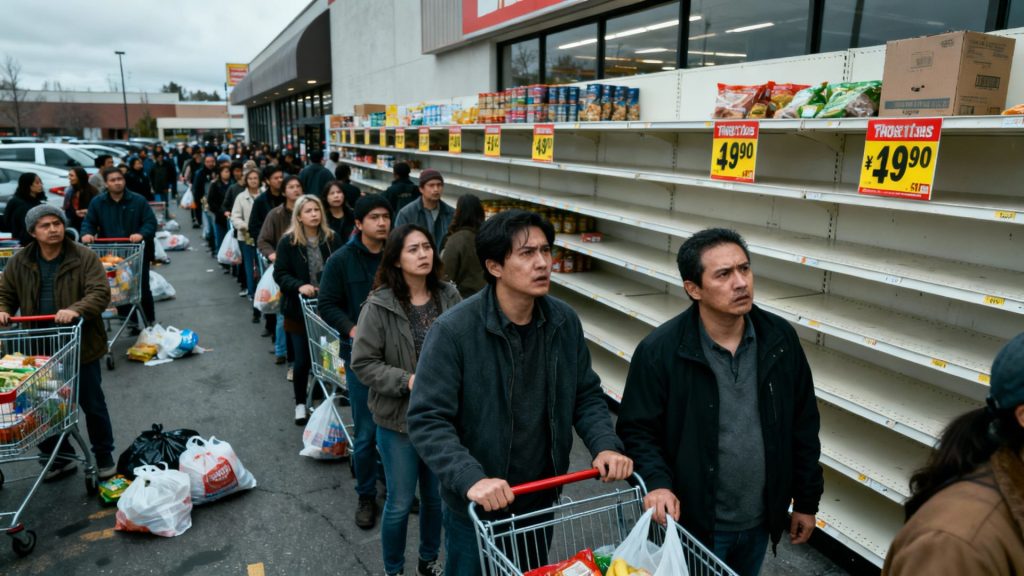
Global Inflation’s Unyielding Grip: Economies Navigate the Tightrope of Growth and Stability
As central banks grapple with persistent price pressures and slowing output, the specter of stagflation looms over global markets, testing policy resilience amid trade volatilities.
Recent economic data paints a stark picture: global inflation remains stubbornly elevated, with the International Monetary Fund (IMF) reporting a 5.8% average rate for advanced economies in September 2023, while GDP growth forecasts have been trimmed to 2.7% for the year, down from earlier projections. This dual challenge of high prices and tepid expansion has ignited fears of stagflation, echoing the 1970s, as supply chain bottlenecks and energy cost surges—fueled by geopolitical tensions—continue to ripple through markets. Transitioning to the root causes, this phenomenon underscores how interconnected global factors can swiftly derail recovery efforts.
Delving deeper, the persistence of inflation stems from a complex web of factors, including supply chain disruptions exacerbated by ongoing conflicts and energy price volatility, where crude oil has hovered near $90 per barrel. As Federal Reserve Chair Jerome Powell noted in a recent speech, “The path to price stability is proving more arduous than anticipated,” highlighting the dilemma central banks face in balancing aggressive rate hikes against the risk of triggering recessions. Meanwhile, European Central Bank President Christine Lagarde emphasized the need for vigilance, as eurozone inflation hit 8.1% in August, driven by food and energy costs. This analysis reveals how monetary tools are stretched thin, with historical parallels suggesting that premature easing could reignite inflationary fires.
The impact on key industries is palpable, with technology and manufacturing sectors bearing the brunt of higher input costs and demand slowdowns. For instance, semiconductor exports from major hubs like Taiwan and South Korea have declined by 15% year-on-year, reflecting reduced consumer spending on electronics, while the automotive industry faces production delays due to chip shortages. Conversely, renewable energy investments are surging, with global solar and wind capacity additions up 20% in 2023, as governments push for green transitions amidst climate pressures. This shift illustrates the uneven terrain industries navigate, where digital currencies and AI-driven efficiencies offer glimmers of innovation but struggle to offset broader economic headwinds.
In response, policymakers are deploying a mix of fiscal and monetary measures, with the Fed raising interest rates to a 22-year high of 5.25-5.5% in September, aiming to cool inflation without stifling growth. Similarly, the ECB has signaled further hikes, while emerging markets like Brazil and India implement targeted subsidies to shield vulnerable populations. However, these actions risk exacerbating debt burdens, as noted by IMF analysts, who warn of potential financial instability in highly leveraged economies. This delicate balancing act underscores the urgency for coordinated global strategies, yet divergent national priorities often hinder unified responses.
Looking ahead, the outlook is fraught with risks, including the potential for a mild recession in major economies by early 2024, compounded by escalating trade disputes and climate-related disruptions. Geopolitical flashpoints, such as tensions in the South China Sea, could further disrupt supply chains, while the rapid adoption of blockchain and AI technologies presents opportunities for efficiency but also vulnerabilities to cyber threats. As one market strategist observed, “The digital transformation is a double-edged sword—accelerating growth while amplifying systemic risks.” This forward gaze highlights the need for adaptive policies that harness technological advancements to build resilience against unforeseen shocks.
In conclusion, the current economic landscape demands a nuanced approach, where innovation in fintech and sustainable industries must align with prudent monetary stewardship to navigate the tightrope between growth and stability. The global economy stands at a pivotal juncture, with lessons from past crises offering a roadmap but no guarantees, as the interplay of inflation, policy, and technology reshapes the future of prosperity.